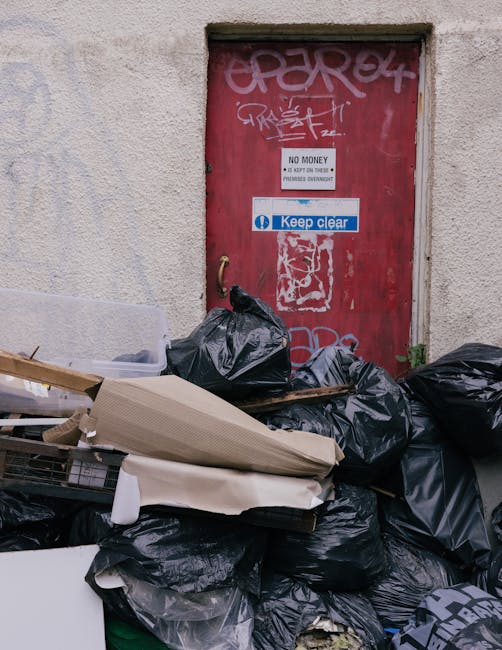
Avoid hidden fees in Harringay rubbish clearance quotes
Posted on 06/06/2026

If you've ever asked for rubbish removal pricing and felt the quote was a bit too neat, you're not alone. Hidden extras can creep into a clearance job quickly: access charges, parking surprises, mattress fees, stair carry costs, and all the little add-ons that only appear when the team is already outside your door. This guide is here to help you avoid hidden fees in Harringay rubbish clearance quotes by spotting the warning signs early, asking the right questions, and comparing quotes on a like-for-like basis. It's practical, local, and written for real people who just want the job done properly without the post-job shock.
Whether you're clearing a flat near the Ladder, getting rid of a worn sofa, or dealing with mixed household waste after a move, the same rule applies: clarity beats guesswork every time. And honestly, it saves a lot of hassle.
- Why this matters
- How rubbish clearance quotes work
- Key benefits of transparent pricing
- Who this guide is for
- Step-by-step guidance
- Expert tips
- Common mistakes
- Tools and resources
- Compliance and best practice
- Options and comparison
- Real-world example
- Practical checklist
- Conclusion
- Frequently asked questions
Why Avoid hidden fees in Harringay rubbish clearance quotes Matters
Price matters because rubbish clearance is often one of those services people book under time pressure. A room needs clearing. A landlord wants the flat back. A builder's skip won't fit on the street. Or you've simply reached that stage where the pile in the hallway has become, well, a bit embarrassing. In moments like that, it's easy to focus only on the headline price.
That's exactly where hidden fees do their damage. The quote may look fine at first glance, but the final invoice can grow if the company has not clearly explained what is included. In a local area like Harringay, where access can vary from wide front drives to tight stairwells and limited parking, small operational details can affect the cost. If those details aren't discussed upfront, the customer is left guessing.
Transparent pricing also matters for trust. A fair rubbish clearance company should be able to explain how it prices by volume, weight, item type, labour, access conditions, and disposal costs. If you feel rushed, nudged, or asked to "sort it later," that's usually a sign to slow down. To be fair, the right company won't mind questions. They expect them.
Practical takeaway: the cheapest quote is not always the cheapest job. The real cost is what you actually pay once the team has finished, loaded up, and driven away.
It also protects your plans. If you're arranging a same-day clearance before a sale, a move, or a landlord inspection, even a small pricing dispute can disrupt the schedule. And nobody wants that little knot in the stomach at 8:30 in the morning when the van turns up. You want certainty.
How Avoid hidden fees in Harringay rubbish clearance quotes Works
The process starts with the quote itself. A good quote should be built from clear assumptions: what type of waste is being removed, how much there is, how easy it is to access, whether heavy lifting is needed, and whether any special disposal applies. If the company asks for photos, item lists, or a short video, that's usually a good sign. They are trying to price accurately, not guess.
Hidden fees tend to appear when the quote is too vague. For example, "from GBPX" can be useful as a starting point, but only if the company explains what could change that figure. If not, you may be comparing a starting point with someone else's fixed price. That is not the same thing at all.
In practice, rubbish clearance quotes often fall into a few pricing styles:
- Volume-based pricing: you pay according to how much space the waste takes up in the vehicle.
- Item-based pricing: individual bulky items such as sofas, wardrobes, or appliances may have set charges.
- Load-plus-labour pricing: the company charges for the load size and the time or effort required.
- Fixed quotes: the company agrees a total price in advance based on the information you provide.
For local household jobs, fixed quotes are often easier to understand, provided the scope is accurate. For mixed jobs or awkward access, the provider may need to explain conditions that could affect the final amount. That's not necessarily a red flag. It becomes a problem only when those conditions are not explained clearly in advance.
When comparing quotes, the key question is simple: what exactly is included? Labour, loading, transport, disposal, recycling, congestion, parking, waiting time, and VAT if applicable should all be clear. If something is excluded, ask why. A straight answer now is better than a surprise later.
If you want a broader look at how pricing should be presented, the page on pricing and quotes is a useful starting point.
Key Benefits and Practical Advantages
When a rubbish clearance quote is transparent, you get more than a predictable bill. You get control over the whole job. That sounds simple, but it makes decision-making much easier, especially when you are juggling a move, a refurbishment, or a busy family week.
Here are the biggest advantages:
- No nasty surprises: you know what you are paying for before the van arrives.
- Easier comparison: you can compare one quote with another on the same basis.
- Better budgeting: useful if you are clearing a home, office, or rental property.
- Less stress on the day: no awkward conversations at the kerbside.
- Higher service quality: clear pricing often goes hand in hand with clear communication.
There is also a practical benefit people sometimes miss: transparency helps you choose the right service level. Maybe you don't need a full house clearance after all. Maybe a smaller domestic collection is enough. Or perhaps you only need one bulky item removed. A clear quote makes that easier to see.
This matters in real life. If you are emptying a flat in Harringay after a tenancy ends, time is usually tight and the waste mix is often messy: bags, broken shelving, a couple of old chairs, maybe an appliance. A good quote should reflect the actual load rather than a blanket assumption that every job is large and complicated.
And yes, you should still expect professional handling. A reputable team will usually explain how they sort, load, transport, and dispose of waste, and they should be able to point you toward their recycling and sustainability approach if that's important to you.
Who This Is For and When It Makes Sense
Strictly speaking, this guide is for anyone who wants a rubbish clearance quote that stays honest from first contact to final invoice. In the real world, that covers a lot of people.
You may find this especially useful if you are:
- clearing a rented flat before check-out
- moving house and trying to reduce waste
- getting rid of old furniture or white goods
- managing builders' waste after a renovation
- sorting garden waste after a big tidy-up
- running a small business and needing commercial waste removed
- handling a house clearance for a relative
If you're a landlord, the main concern is usually speed and accountability. If you're a homeowner, it's probably budget and convenience. If you're a builder, it's access, load size, and timing. Different needs, same problem: the quote should tell the truth.
There's a local angle too. Harringay homes vary a lot in layout and access. Some are simple front-door collections. Others involve basement steps, shared entrances, narrow staircases, or awkward parking. If you live in a top-floor flat, the company should know that before quoting. If you don't mention it, there is room for pricing friction later. Nobody enjoys that.
If you're curious about wider household context in the area, the article on living in Harringay gives a nice sense of the local setting and how everyday logistics can shape home projects.
Step-by-Step Guidance
Let's make this practical. If your goal is to avoid hidden fees, follow a process rather than relying on instinct. Instinct is fine for choosing a takeaway. Less useful for rubbish removal.
- List everything that needs removing. Be specific. "General rubbish" is too vague. Write down furniture, bags, appliances, garden waste, builders' debris, and anything unusual.
- Note access details. Mention stairs, lifts, parking limits, gated entrances, basement levels, long carries, or tight hallways.
- Share photos if possible. Good images reduce guesswork. One quick photo from the doorway can reveal more than a long phone call.
- Ask what the quote includes. Labour, loading, transport, disposal, VAT, and any minimum charge should be spelled out.
- Ask what could change the price. This is the key question. If extra waste is found, if access is harder than described, or if specialist disposal is needed, when does the price move?
- Request a written quote. Even a short email summary helps avoid confusion later.
- Confirm payment terms. Ask when payment is due, what methods are accepted, and whether deposit terms apply. The page on payment and security is worth reading if you want a clearer sense of safe payment expectations.
- Check the company's credentials. Waste carriage and insurance matter. If something goes wrong, you want a provider that works properly and responsibly.
- Reconfirm before the job. A short confirmation message on the day can prevent misunderstandings. It sounds small, but it helps.
A quick example: if you ask for "one sofa, one armchair, three black bags, and a broken chest of drawers" but forget to mention the second-floor walk-up with no lift, the quote may need revision. Not because anyone is trying to catch you out, but because labour time changes. That's fair enough. The point is to surface that detail early.
Expert Tips for Better Results
After a while, you notice the same patterns. The companies that quote clearly usually operate clearly. Not always, but often enough to matter.
Here are the habits that help most:
- Use a "what's included?" habit. Ask it twice if needed. The answer should be simple and direct.
- Be honest about volume. If you're unsure, over-explain rather than under-explain. Surprises are what create extras.
- Separate ordinary waste from specialist waste. Appliances, hazardous materials, and some construction waste can require different handling.
- Compare on total value, not just headline price. A slightly higher quote with all-in pricing can be better than a low teaser rate.
- Ask about recycling. Good providers should be able to explain how they divert suitable items from landfill, where practical.
- Keep the quote and any follow-up messages. That record can save a back-and-forth later.
One small but useful tip: ask whether the price is based on estimated volume or actual load. That distinction matters. An estimated load is often fine, but it should be clear what happens if the van is fuller than expected. If that answer feels slippery, trust your instincts.
If your job is mostly furniture, the dedicated furniture removal page may help you judge what level of service is sensible. Likewise, if you're dealing with old appliances, white goods and appliance disposal is a more accurate fit than a generic clearance description.
And yes, it is okay to sound a little picky. You are paying for a service, not entering a mystery competition.

Common Mistakes to Avoid
Most people don't get caught out because they are careless. They get caught out because they are busy. That's a different thing.
These are the mistakes that cause the most trouble:
- Accepting a quote without asking what it covers. This is the big one.
- Forgetting to mention access issues. Stairs, parking, and distance from van to door can all affect price.
- Assuming all waste is treated the same. It isn't. Mixed waste, bulky items, and specialist items can be priced differently.
- Comparing quotes that are not equivalent. A fixed price and an estimate are not direct rivals.
- Not checking for minimum charges. Small jobs can sometimes attract a base fee.
- Ignoring the disposal side of the service. Loading is only part of the job.
Another mistake is treating silence as clarity. If the company doesn't mention VAT, parking, or extra labour, don't assume those things are included. Ask. It may feel slightly awkward in the moment, but it's far less awkward than an inflated bill later.
Also, be cautious with phrases like "no hidden charges" if the provider never explains the actual pricing mechanics. It sounds reassuring, sure. But real reassurance comes from details, not slogans.
Tools, Resources and Recommendations
You do not need fancy tools to avoid hidden fees. A phone, a notes app, and a few good questions will do a lot of the work. Still, some resources and habits make the process smoother.
Recommended practical tools:
- Photo checklist: take pictures of each room, the pile, the access route, and anything bulky.
- Simple item list: write items one by one instead of using broad labels.
- Message template: keep a short standard note you can send to multiple providers for comparison.
- Cost comparison notes: record what each quote includes and excludes.
Recommended pages to read before booking:
- services overview to understand the types of clearance available
- pricing guidance for how quotations are framed
- insurance and safety for peace of mind about handling and site safety
- waste carrier licence and compliance for a better understanding of responsible waste handling
If you're planning a larger project, the right service page can also help set expectations. For example, house clearance is different from builders waste removal, and both differ from garden waste removal. Choosing the right category reduces the chance of pricing surprises.
That may sound obvious, but lots of problems start with the wrong job description. Easy mistake, honestly.
Law, Compliance, Standards, or Best Practice
When rubbish clearance is involved, compliance is not just paperwork. It affects safety, legality, and how responsibly waste is handled. You do not need to become a waste-law expert, but you should expect basic standards from anyone you hire.
Good practice usually includes:
- clear identification of the waste carrier
- reasonable pricing transparency
- appropriate insurance
- safe lifting and loading practices
- lawful disposal routes
- careful handling of recyclable and non-recyclable waste
In the UK, responsible waste removal companies should be able to explain their compliance approach in plain language. That may include how they manage licences, how they separate waste streams, and how they protect both customers and workers during collection. The details matter because they reduce risk. Simple as that.
If you want to understand the company's wider standards, it can help to read their about us page alongside their formal policies such as terms and conditions and privacy policy. These pages should not be used as a substitute for a proper quote, of course, but they do reveal how seriously the business treats clarity.
For customers concerned about ethical conduct across the supply chain, it can also be reassuring to review a company's modern slavery statement. It's part of the bigger picture of responsible operations.
One more thing: accessibility and site conditions are part of safety too. If you have particular access needs or a tricky building layout, it's worth checking the accessibility statement and asking how the team accommodates real-world conditions.
Options, Methods, or Comparison Table
Not every job needs the same quoting method. Here's a simple comparison to help you choose what suits your situation best.
| Quote method | Best for | Pros | Watch-outs |
|---|---|---|---|
| Fixed quote | Clear, well-described jobs | Predictable, easy to budget, fewer surprises | Must be based on accurate information |
| Volume-based quote | Mixed loads and typical household waste | Flexible and often fair for uneven loads | Needs clear explanation of how volume is measured |
| Item-based quote | Bulky items, single-item removals, appliances | Useful for simple jobs with few items | Additional labour or access charges may still apply |
| Estimate with site check | Large, awkward, or uncertain clearances | More accurate for complex jobs | Needs careful confirmation before work starts |
For many Harringay households, the sweet spot is a quote that is simple enough to understand but detailed enough to avoid ambiguity. If you are comparing providers, ask whether their figure is a final fixed price or a working estimate. That one distinction can save you a lot of confusion.
Also, if your clearance is tied to a move, it can help to read about strategies for minimising moving waste. The less waste you carry into moving day, the less chance you have of paying for unnecessary volume.
Case Study or Real-World Example
Here's a realistic example. A resident in a Harringay flat needs a mix of waste removed before the end of a tenancy: a sofa, a broken bookcase, several bin bags, an old microwave, and some loose packaging from a recent move. The flat is on the second floor, there is no lift, and street parking is tight in the afternoon.
They first request two quotes. One provider offers a quick price over the phone without asking much. The other asks for photos, checks access, and confirms what is included. At first, the first quote looks cheaper. But it excludes stair carry time and charges extra for the appliance. The second quote is slightly higher, yet it clearly covers the whole job.
On the day, the second team arrives, loads everything, and the price stays as agreed. No debating. No fiddly extras. No moment where everyone stands in the hallway pretending to "just check one thing."
That is the kind of outcome people usually want. The not-so-glamorous truth? A clear quote often saves money by preventing the wrong expectations from taking root.
If the job involves a complete clear-out after a sale or a change of tenancy, it can also help to look at related local reading such as selling your home in Harringay or buying a home in Harringay. Those situations tend to generate more waste than people expect.
Practical Checklist
Use this checklist before you accept any quote. It's short, but it covers the parts that matter.
- Have I listed every item or waste type accurately?
- Have I explained access conditions, including stairs, parking, and carrying distance?
- Do I know whether the quote is fixed, estimated, or subject to review?
- Have I asked what is included in the price?
- Have I asked what could increase the price?
- Have I confirmed whether VAT, parking, or minimum charges apply?
- Do I have the quote in writing?
- Have I checked the provider's payment and security information?
- Do I understand the provider's compliance and insurance basics?
- Is the service category the right one for my job?
If you can tick all of those boxes, you are in a much better position. Not perfect, because life is life, but definitely better.
Expert summary: the best protection against hidden fees is not negotiation after the fact; it is precise information before the quote is accepted.
Get a free quote today and see how much you can save.
Conclusion
Hidden fees are rarely hidden forever. Usually, they are just unexplained long enough to cause frustration. If you want to avoid that, the formula is straightforward: describe the job clearly, ask direct questions, get the quote in writing, and choose a provider that explains its pricing without dancing around the details.
In Harringay, where homes and access conditions vary from one street to the next, a careful quote is more than a nice extra. It is the thing that keeps the day calm, the invoice predictable, and the whole process a bit more human. Which, let's face it, is what most people want anyway.
And once you've done it properly, the whole job feels lighter. The hallway is clear, the van has gone, and there's that quiet sense that one annoying task is finally off your list.